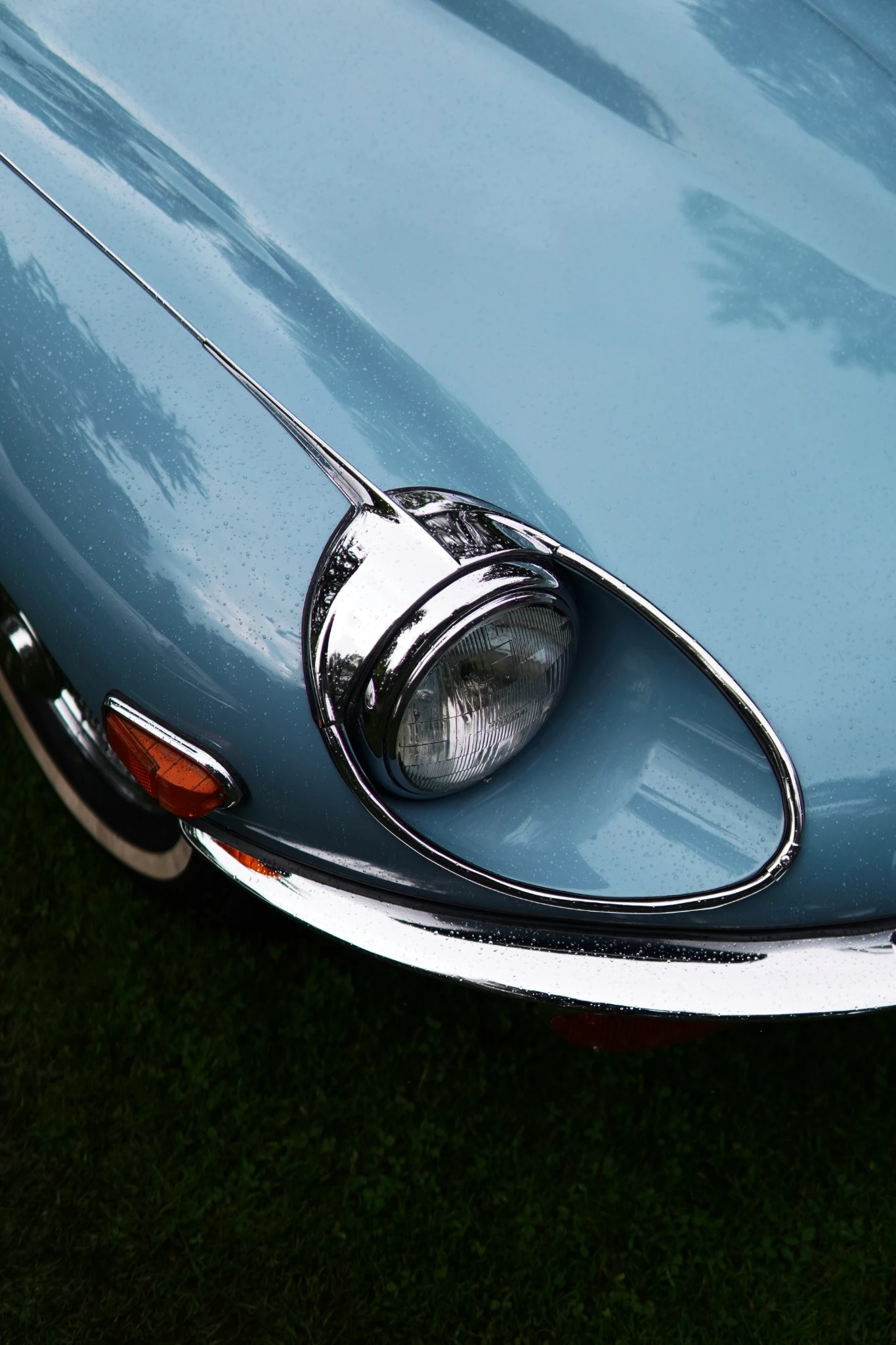
Original paint, or a respray that cost months and thousands, deserves better than stone chips on the first summer run. Paint protection film (PPF) is a clear, self-healing urethane layer that takes the hits so your paintwork doesn't. On a classic it has to be done with more care than on a modern car, and that's how we fit it at our Gillingham workshop.
Why classic paint needs a different approach
Most PPF fitters work on modern factory paint: thick, uniform and fully cured. Classic paint is rarely like that. It may be original single-stage enamel, decades-old cellulose, or a fresh two-pack respray that is still curing. Each behaves differently under film adhesive.
Before any film goes on, we measure paint depth across every panel, check for previous repairs and filler, and look at adhesion on edges and seams. If the paint isn't sound enough to carry film safely, we tell you, rather than fit it and leave the problem for whoever removes it later.
PPF options for classic cars
- Front-end packages: bonnet leading edge, front wings, bumpers or valance, headlamp glass and mirrors.
- Full-car wraps for concours cars, rally and tour use, or freshly restored paint.
- Gloss film that disappears on the car, or satin film for a period matt look without repainting.
- Hand-trimmed edges on panels where pre-cut kits don't exist, which is most classics.
- Paint correction before fitting, so the film seals in a finished surface rather than swirls.
PPF on freshly painted cars
Film can't go straight onto new paint. Solvents need to escape first, or the film can trap them and cause hazing or lifting. We'll agree timing with your paint shop, or our own body shop if we did the work, and fit once the paint is ready. That's usually weeks, not days.
Looking after the film
PPF is low maintenance but not maintenance-free. We hand over washing guidance with every fit, and we can add a ceramic coating on top of the film to make it easier to clean and keep its gloss.
Questions owners ask
Will PPF damage original paint?
Fitted on sound paint and removed properly with heat, it shouldn't. The risk comes from weak or poorly adhered paint, which is why we assess every panel before quoting and won't fit where we think removal could lift paint.
Can you film a car with chrome bumpers and brightwork?
Yes. We film the painted surfaces and work around chrome, badges and trim. Brightwork can be protected separately with a ceramic coating.
How long does PPF take to fit?
A front-end package usually takes one to two days. A full car typically needs four to six days including preparation and correction. We'll confirm when we've seen the car.
Is PPF or ceramic coating better for a classic?
They do different jobs. PPF physically stops stone chips and scuffs. A ceramic coating makes paint easier to clean and protects against contamination and UV, but won't stop chips. Many owners film the front of the car and coat the rest.